



Acrylic kitchen fronts — the high gloss that makes an impression. Are they worth it?
Acrylic fronts are a material that provokes extreme reactions in our factory. Some customers see them and say: "that's exactly what I want". Others ask whether it isn't the same as lacquer. Still others have heard that "acrylic scratches" and give up before they even start talking. After more than 30 years of producing bespoke kitchens we have concrete experience on the subject — and we will say plainly when acrylic is a great choice and when it is better to choose something else.
What are acrylic fronts?
An acrylic front is an MDF board covered with a layer of acrylic — a plastic from the PMMA group (polymethyl methacrylate). The acrylic is applied as a sheet and laminated under high pressure onto the base board. The final result is a surface with an exceptional depth of gloss — noticeably more intense than a standard gloss lacquer.
Acrylic is harder than typical polyurethane lacquer, but it has a different property: scratches on acrylic can be polished out — which cannot be done with lacquer. This changes the approach to servicing the fronts.
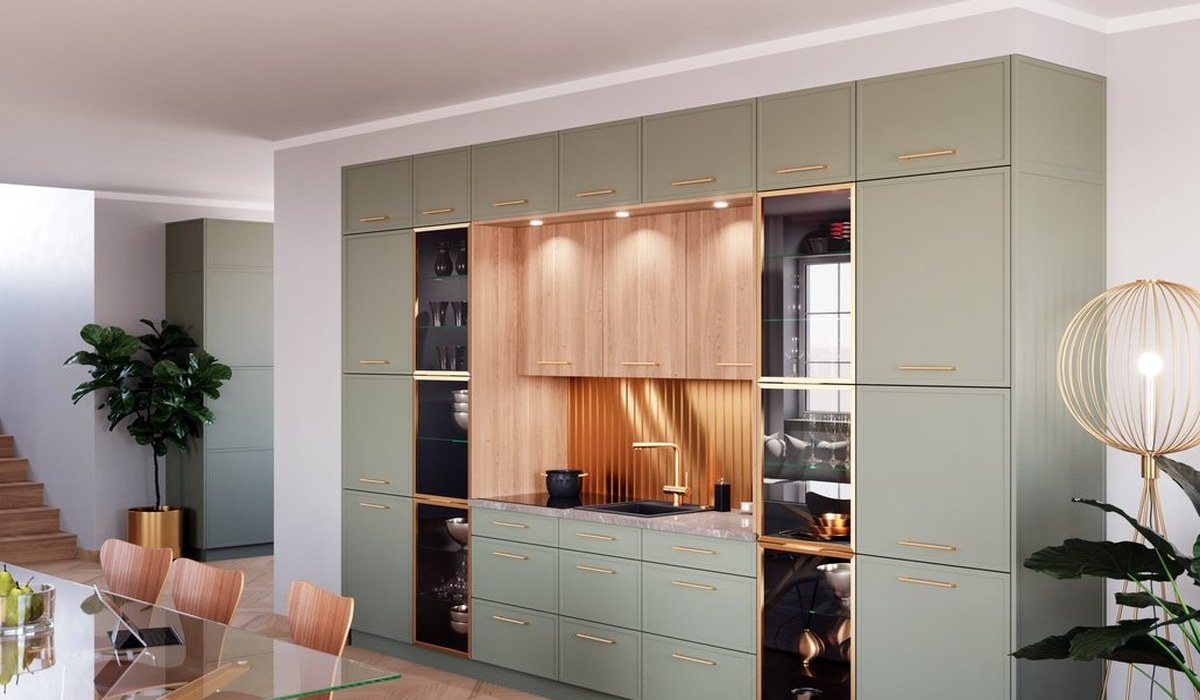
In our factory acrylic fronts are available in the Jessica line — designed with maximum visual effect in mind alongside high quality requirements.
Acrylic vs gloss lacquer — what sets them apart?
We hear this question often. Both give a gloss effect, but they are completely different technologies with different usage properties.
| Acrylic front | Gloss lacquer | |
|---|---|---|
| Depth of gloss | Exceptionally high, "glass-like" | High, but less intense |
| Surface hardness | Higher | Lower |
| Scratches | Can be polished out | Permanent, unremovable |
| Fingerprints | Very visible | Very visible |
| Palette of colours | Limited to the catalogue | The full RAL/NCS palette |
| Repairing minor scratches | Possible (polishing) | Impossible without re-lacquering |
The practical conclusion: acrylic gives a deeper gloss than lacquer, but limits you on colour. If you care about a specific colour outside the standard catalogue — lacquer wins. If you want maximum visual effect in the available colours — acrylic is better.
The advantages of acrylic fronts
Visual effect without compromise
Acrylic in white looks like glass. In black — like a mirror. In coloured shades it has a depth that other materials won't reproduce. It is a material that makes a kitchen look more expensive than it costs — and which always looks spectacular in photos.
The ability to polish
This is a property lacquer doesn't have. Minor scratches and scuffs on acrylic can be removed with a polishing paste for plastics. It is not a complicated procedure — it is done like polishing car paint. Not every scratch can be removed completely, but the result is decidedly better than with lacquer, where a scratch stays forever.
Resistance to moisture
Acrylic does not absorb moisture and is resistant to steam. It works perfectly near the sink and cooking area. The edges, provided they are properly sealed, don't react to moisture the way some cheap laminates do.
Ease of cleaning
An acrylic surface has no pores. Grease, coffee, juice — everything wipes off with a damp cloth without the use of chemicals. Provided you do it regularly and don't let the dirt dry on for several days.
The disadvantages of acrylic fronts — we say it plainly
Visible fingerprints
High-gloss acrylic collects fingerprints even more than gloss lacquer. White acrylic after the morning breakfast of a family of four looks like an exhibit from an evidence room. Daily (or several-times-a-day) wiping is a necessity. If that is a prospect that tires you — choose matt.
Visible streaks after wiping
With acrylic it is important to wipe with a dry cloth after every wet cleaning. Streaks left by water are very visible. A microfibre cloth is essential kitchen equipment here.
A limited palette of colours
Acrylic is produced in sheets by external suppliers — we can't order any shade from the RAL palette as we can with lacquer. The colours are available from a catalogue. The choice is wide, but if you have a specific colour in the design and are looking for its exact reproduction — lacquer will be more precise.
Price
Acrylic fronts belong to the higher price segment — usually comparable to gloss lacquer or slightly higher. If your budget is limited, it is worth considering matt lacquer or laminate as an alternative.
Who most often chooses acrylic fronts with us?
After years of observing our customers we see a clear profile of the person who is happy with acrylic:
- People who value a spectacular visual effect and are prepared to spend time on regular wiping.
- Kitchens in investment flats — in photos for rental acrylic looks outstanding, and tenants are obliged to look after the surfaces.
- Kitchens without children or with school-age children and older — small children and acrylic are a combination that generates frustration.
- Customers with a kitchenette in the living space — where the kitchen is part of the display and cooking is less intensive.
We advise against acrylic for people who cook every day and intensively, have small children, don't like daily wiping or expect the front to look like new without any care.
Caring for acrylic fronts — what matters
- Daily or after each cooking session: a microfibre cloth, lightly dampened, then dry.
- Greasy dirt: water with a little washing-up liquid, wipe, dry.
- Minor scratches: a polishing paste for plastics or for car paint. Polish in circular motions, then finish with a dry cloth.
- Avoid: abrasive powders, acidic cleaning products, acetone, products with a high concentration of isopropyl alcohol, steam mops.
Acrylic fronts and durability — a realistic assessment
A good-quality acrylic front, properly cared for, will last 15 years and more. We see kitchens from our factory after a decade of use — where customers take care of maintenance, acrylic still makes an impression.
The risk: without daily care and with intensive use by a family with children — after 5–6 years the surface may look tired. Not because of poor quality, but because of an accumulation of micro-damage that couldn't be polished out as it went along.
Do you want to see acrylic fronts before deciding?
In our showroom in Elbląg you can see acrylic fronts of the Jessica line in various colours — in natural and artificial light, next to lacquered and laminated fronts. The difference is obvious to the naked eye.
We will prepare a free 3D design of your kitchen in acrylic before you decide — so that you can see exactly how it will look, rather than just guessing from a catalogue.
Call: 608 517 844 — Mon–Thu 8:00–18:00, Fri 8:00–15:00
or write: kuchnie@furnipark.pl
Lacquer or laminate? The full comparison from a manufacturer's perspective →