




LED lighting in a bespoke kitchen — where to install it, what to choose and how much it costs
Kitchen lighting is one of the elements that has the greatest impact on everyday use — and one of those customers think about too late. When the furniture is already finished and the electrics are done, the options are limited. That is why it is worth planning the lighting together with the kitchen design — not after the fact.
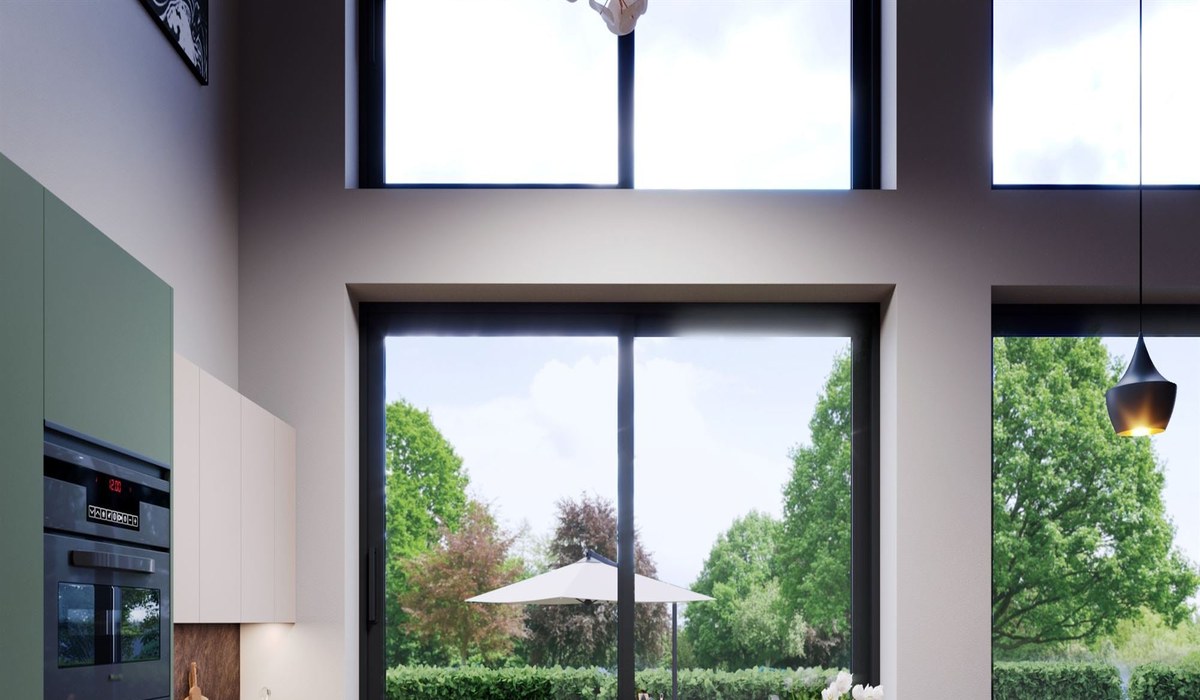
At Furnipark we have been integrating LED lighting into kitchens for years. We know what works, what looks good in photos but fails in practice, and how much it realistically costs to add LED to a bespoke kitchen design.
Three zones of lighting in a kitchen — and why each is different
The basic mistake when planning kitchen lighting: treating it as one room with one light source. A kitchen has several zones with different lighting requirements.
Zone 1 — General lighting (ceiling)
Provides even illumination of the whole room. Usually LED spots recessed into the ceiling (downlights) or a ceiling light. This lighting is most often planned by the electrician at the installation stage — before the furniture is ordered. Colour: 3000–4000 K (warm white to neutral).
Zone 2 — Task lighting (under the wall cabinets)
The most important zone for the kitchen's functionality. It directly illuminates the work surface, where you chop, cook, prepare ingredients. Without this lighting you cast a shadow with your own body onto the worktop while working at it.
Mounted under the bases of the wall cabinets — as an LED strip in an aluminium profile or strip. It requires an electrical cable to be run out in the right place (before installing the furniture) or power from a cabinet. Colour: 4000 K (neutral white) — best for working in the kitchen.
Zone 3 — Ambient and decorative lighting
LED strips under the base cabinets (floor lighting), inside glass cabinets (glazed units), above the island (pendant lamps), behind the fronts (a backlighting effect). This is an optional layer — it doesn't affect functionality, but significantly changes the mood and look of the kitchen in the evening.
LED strips or spotlights — what to choose under the cabinets
LED strip in an aluminium profile
The most commonly used solution under the wall cabinets. An aluminium profile (a strip mounted to the lower edge of the cabinet) hides the LED strip and evenly diffuses the light. The effect: linear, continuous lighting of the entire length of the worktop without spot "patches".
Advantages: even light, aesthetic concealment of the source, the option to dim.
Disadvantages: requires running a cable through the cabinets or along the back wall — this we plan before installation.
Spot halogens or LEDs
Recessed or surface-mounted spots installed in the base of the cabinet. They give concentrated patches of light — they illuminate specific places well (e.g. over the sink), but can give uneven lighting on long worktops.
Advantages: easier installation, the option to focus light on a specific place.
Disadvantages: less even than a strip, visible spot light sources.
Our recommendation: an LED strip in an aluminium profile under the wall cabinets + optionally spots over the sink as an accent. This is the solution that works best in everyday use.
The colour of the light — 3000 K or 4000 K?
This is a question at which customers often shrug: "I don't know, whatever". And the choice has a real impact on the comfort of use.
| Colour | Character | Use in the kitchen |
|---|---|---|
| 2700–3000 K (warm white) | Yellowish, cosy, relaxing | General, ambient lighting, lamps over the island |
| 3500–4000 K (neutral white) | White, natural, invigorating | Task lighting under the cabinets — best for cooking |
| 5000–6500 K (cool white / daylight) | Bluish, intense | Not recommended in home kitchens — too sterile |
The practical rule: task lighting (worktop) — 4000 K. General and ambient lighting — 3000 K. Mixing colours in one space is possible, but requires a well-thought-out lighting design.
Important: if you choose a dimmer, check whether the LED strip and power supply are compatible with it. Not every LED strip dims smoothly — some flicker at low power.
Lighting inside the cabinets
Increasingly popular — especially in corner cabinets (where it's hard to see what's inside) and in cabinets with glazed units.
Cabinets with glazed units
An LED strip inside the glazed unit illuminates the displayed dishes and gives the kitchen a more "hotel" character in the evening. It requires running power to the inside of the cabinet — we plan this together with the furniture.
Corner cabinets and deep drawers
A motion sensor + a small LED diode inside a drawer or corner cabinet — automatic lighting on opening. Powered by battery (no need for a cable) or from the mains. A practical solution, especially with a deep build.
Who installs LED lighting in a kitchen?
This is a question worth resolving before installation — because responsibility is divided.
- The electrician — runs out the electrical circuit in the right places (under the cabinets, over the island, in the ceiling) before installing the furniture. Without this stage there is nowhere to connect the LED.
- The installation team — fits the aluminium profiles, inserts the LED strips, connects them to the sockets or power supplies run out by the electrician. We can also order and supply the LED components as part of the kitchen equipment.
- You — decide on the colour, dimming, control (switch, dimmer, smart home system).
The key rule: the electrics must be ready before installing the furniture. Cables run out too late mean chiselling walls or running the wires on the outside — which is unaesthetic.
How much does LED lighting in a bespoke kitchen cost?
The cost depends on the scope — from the minimal (task lighting only) to an extensive multi-zone system.
| Scope | Indicative cost (materials + installation) | What it includes |
|---|---|---|
| Task lighting (under the cabinets) | PLN 600–1,500 | Aluminium profiles, 4000K LED strips, power supplies, installation |
| Task lighting + glazed units | PLN 1,000–2,500 | as above + strips inside the glazed units, sensors or switches |
| Full multi-zone system | PLN 2,000–5,000+ | All zones, dimmers, integration with smart home |
The electrician's costs (running out the circuits) are separate — they depend on the scope of the electrical work and are not in the furniture quote.
The most common questions about LED lighting in a kitchen
Can I add LED after installing the kitchen?
An LED strip under the cabinets can be added after installation — if there is a socket or power supply nearby. Battery-powered lighting inside cabinets can be added at any time. However, lighting requiring new electrical cables in the wall — requires an electrician and is harder to add after the fact.
Is a dimmer necessary?
Useful if you like different levels of lighting during the day. With task lighting you usually use full power — a dimmer makes more sense with ambient lighting. It requires special LED strips and power supplies compatible with a dimmer.
How long do LED strips last?
Good-quality LED strips (e.g. Philips, Osram) work 25,000–50,000 hours with normal use. At 4 hours a day that is over 15 years. Avoid the cheapest strips with no stated IP rating and manufacturer source.
Does LED lighting heat up the furniture?
LED generates minimal heat — much less than halogens. With correct installation in an aluminium profile (which dissipates heat) there is no risk of heating the furniture.
We will plan the lighting together with the kitchen design
In the free 3D design we can mark the locations of the LED lighting and suggest which circuits the electrician should run out before installing the furniture. It is better to plan this now than to chisel walls after the fact.
Call: 608 517 844 — Mon–Fri 8:00–16:00
or write: kuchnie@furnipark.pl
A kitchen open to the living room — planning the space →